Why Ashtrays Are Treated as Objects to Hide
Ashtrays are rarely designed to belong in a room.
They are typically created with the assumption that they will be hidden when not in use. They end up in drawers, cabinets, or outdoors. They appear briefly, serve a function, and are removed again. When left out, they are often pushed aside, treated as temporary or peripheral rather than intentional.
This pattern has less to do with behavior and more to do with design. Objects that receive little aesthetic consideration tend to be treated as disposable, regardless of how often they are used.
An ashtray designed only for utility quietly teaches people to put it away.

The Social Tension Around Smoking Objects in the Home
Smoking objects exist in a socially charged space within the home. They are associated with habits people are encouraged to manage discreetly, even when those habits are accepted.
That tension shows up in the objects themselves. Forms are simplified to the point of anonymity. Materials are chosen for convenience rather than longevity. The ashtray becomes something tolerated rather than chosen.
Hiding the object becomes a way of resolving that discomfort. Not because it is dirty, but because it does not feel settled in its surroundings.
A designer ashtray addresses this tension by changing how the object participates in a space.

What Changes When an Ashtray Is Designed to Live in the Open
When an ashtray is designed to live in the open, its purpose expands beyond function.
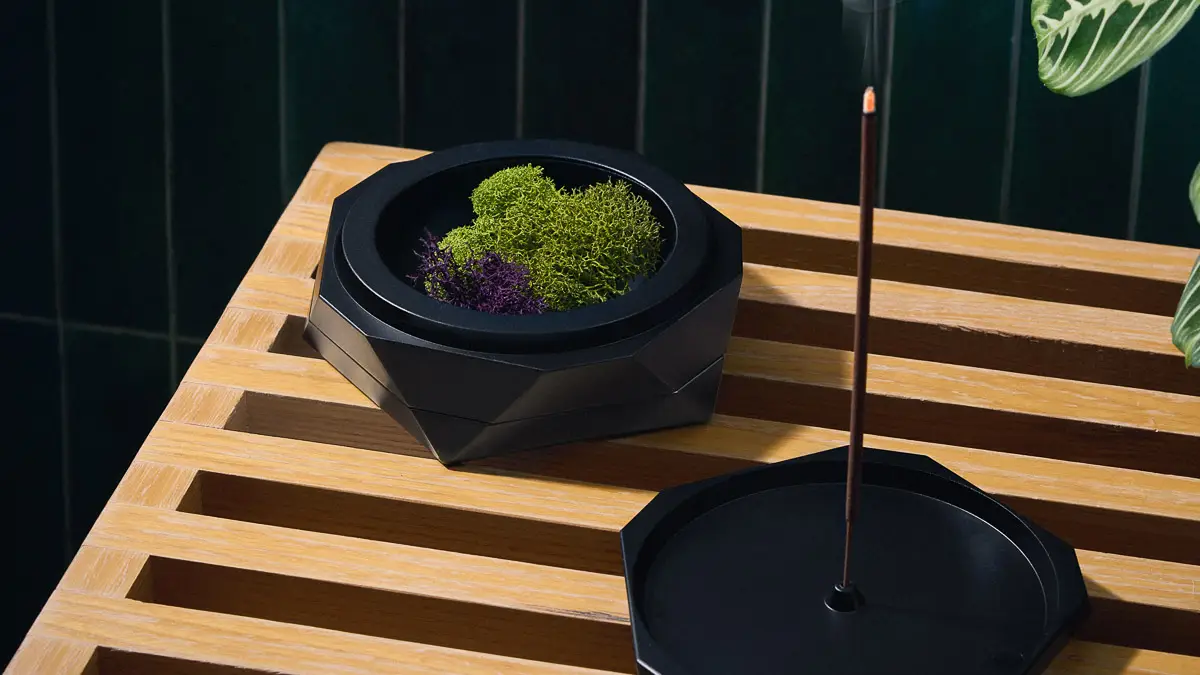
It is no longer just a surface. It becomes a contained form with presence and boundaries. Its open and closed states are equally considered. The object feels complete whether it is being used or not.
This shift is subtle but significant. The ashtray no longer asks to be excused from view. It occupies space with the same quiet confidence as the objects around it.
That is where the idea of a designer ashtray takes hold, not as a category upgrade, but as a change in intent.
From Utility to Vessel
Thinking of an ashtray as a vessel reframes the entire object.
A vessel implies containment and resolution. What belongs inside stays inside. The exterior remains calm, deliberate, and visually settled. Closing the object feels as intentional as opening it.
As a container, the ashtray stops performing and starts resting. As an object of permanence, it resists disposability. It does not need to be cleared away to restore order to a room.
The object earns its place by feeling finished.

Designing Vesta to Resolve the Tension Quietly
Vesta was designed as a response to this design tension, not as a statement.
Its form is restrained. Its presence is intentional. There are no instructions embedded in its appearance and no visual cues that ask for attention. When it sits in a space, it does not interrupt it.
The object works because it removes the reasons an ashtray is typically hidden. It feels resolved, complete, and appropriate to leave where it is.
That quiet resolution is the difference between an object that must be managed and one that can simply remain.
If you want the broader category view, you can read What Is a Designer Ashtray? in The Dig Archive.
If you’re curious about why so many ashtrays end up hidden in the first place, The Main Design Flaw in (Almost) Every Ashtray explores the issue from a different angle.