A designer ashtray is an ashtray created with the same rigor applied to well designed everyday objects. Function is treated as a baseline requirement, not the end goal. Material choice, geometry, durability, and long term use are all considered from the beginning.
Unlike generic ashtrays, which are often optimized for cost or decoration, a designer ashtray is intentionally designed. Every surface exists for a reason. Nothing is added without justification, and nothing essential is left to chance.
Read this post if you want to know what is The Main Design Flaw in (Almost) Every Ashtray.
Function Comes First
At a minimum, an ashtray must:
- Safely contain ash and embers
- Resist heat, staining, and odor retention
- Remain stable during use
- Be easy to empty and clean
Designer ashtrays meet these requirements before any aesthetic decisions are made. If an ashtray fails at basic use, it is not well designed, regardless of appearance.
Design Is About Decisions, Not Features
What separates a designer ashtray from a decorative one is not styling, but intention.
Design considerations often include:
- Material honesty
Solid metals or ceramics chosen for heat tolerance and longevity - Geometry that controls behavior
Forms that guide ash inward rather than allowing buildup at edges - Restraint
Fewer interruptions, fewer seams, and fewer places for residue to collect
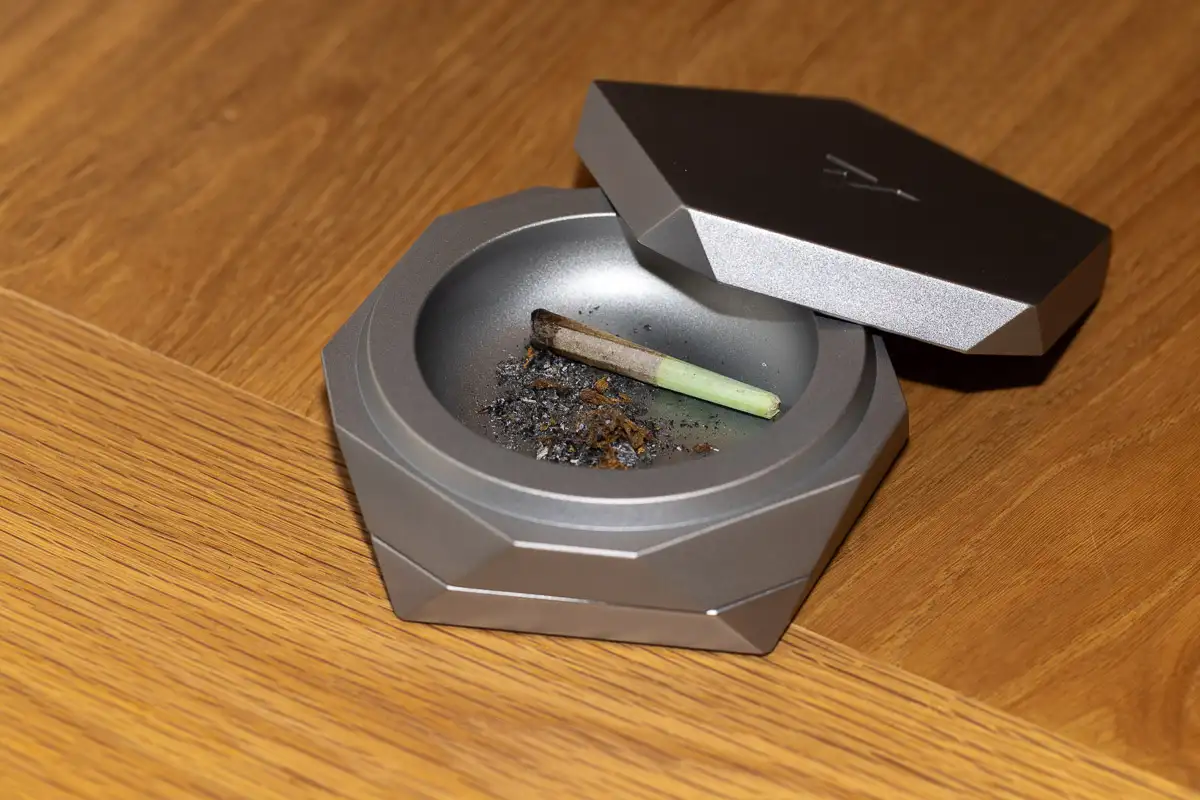
Some designer ashtrays intentionally remove traditional cigarette rest notches. A continuous rim reduces weak points, simplifies cleaning, and emphasizes use over instruction. This is not a missing feature, but a conscious tradeoff.
Designer ashtrays also tend to reject convention when convention adds little value. Rather than repeating inherited forms, some designs reassess what the object actually needs to do.
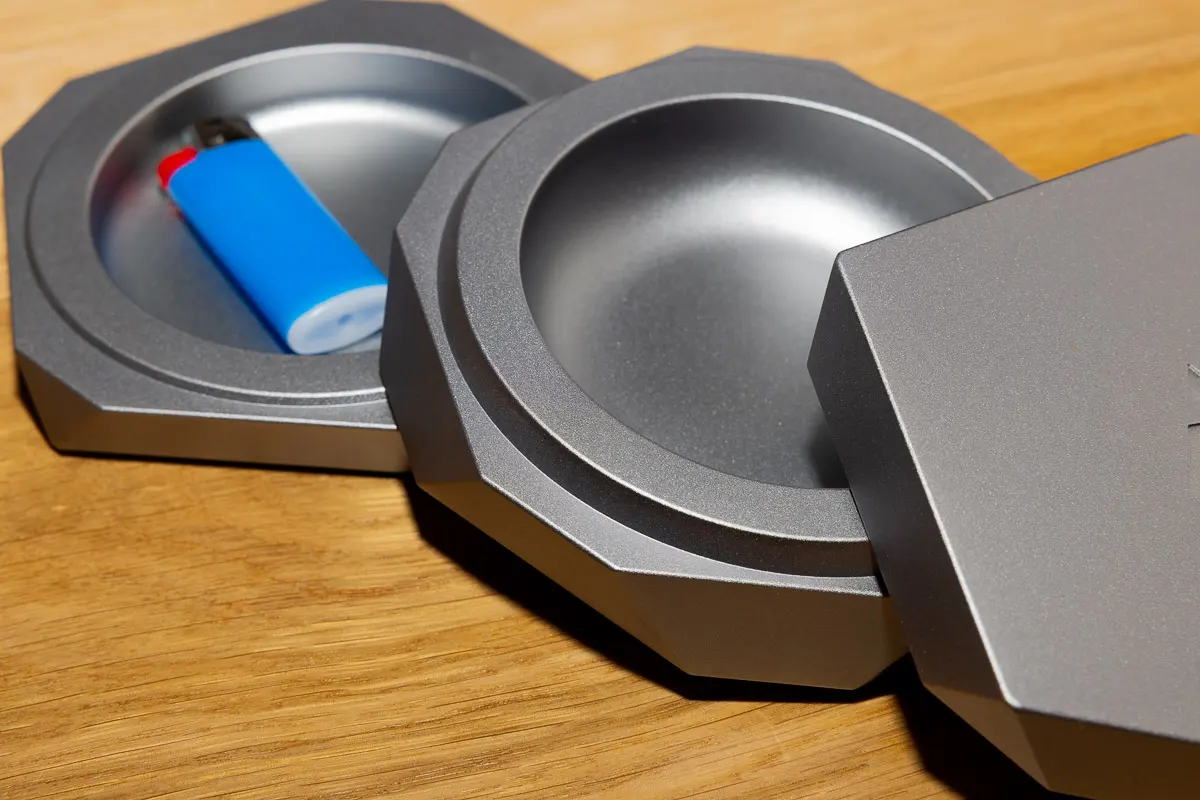
That can result in ashtrays that omit traditional rest notches, integrate secondary functions like incense holding, or incorporate concealed storage for small tools. These choices are not about adding features, but about consolidating purpose. When multiple functions serve the same core use case, combining them can reduce clutter and improve long term use.
Longevity as a Requirement
Designer ashtrays are built to be used repeatedly over time.
That typically means:
- Solid construction instead of thin shells or coatings
- Finishes that tolerate cleaning rather than conceal wear
- Forms that do not rely on trends or ornamentation
Longevity is treated as a design constraint, not an afterthought.
Designed Objects vs Styled Objects
Many ashtrays are styled. Few are designed.
Decorative ashtrays prioritize appearance first and adapt function around it. Designer ashtrays reverse that order. Use defines the object, and form follows.
This distinction becomes obvious over time. Designed objects age predictably and remain usable. Styled objects often reveal their compromises through buildup, instability, or premature wear.
Why Designer Ashtrays Exist
As expectations for everyday objects have risen, utility alone is no longer sufficient. Objects that live on a table are expected to justify their presence through performance, durability, and restraint.
A designer ashtray exists at that intersection. It does its job quietly, holds up to repeated use, and remains visually intentional without calling attention to itself.