Most ashtrays create the same problem: they make you empty them immediately if you want your home to stay fresh.
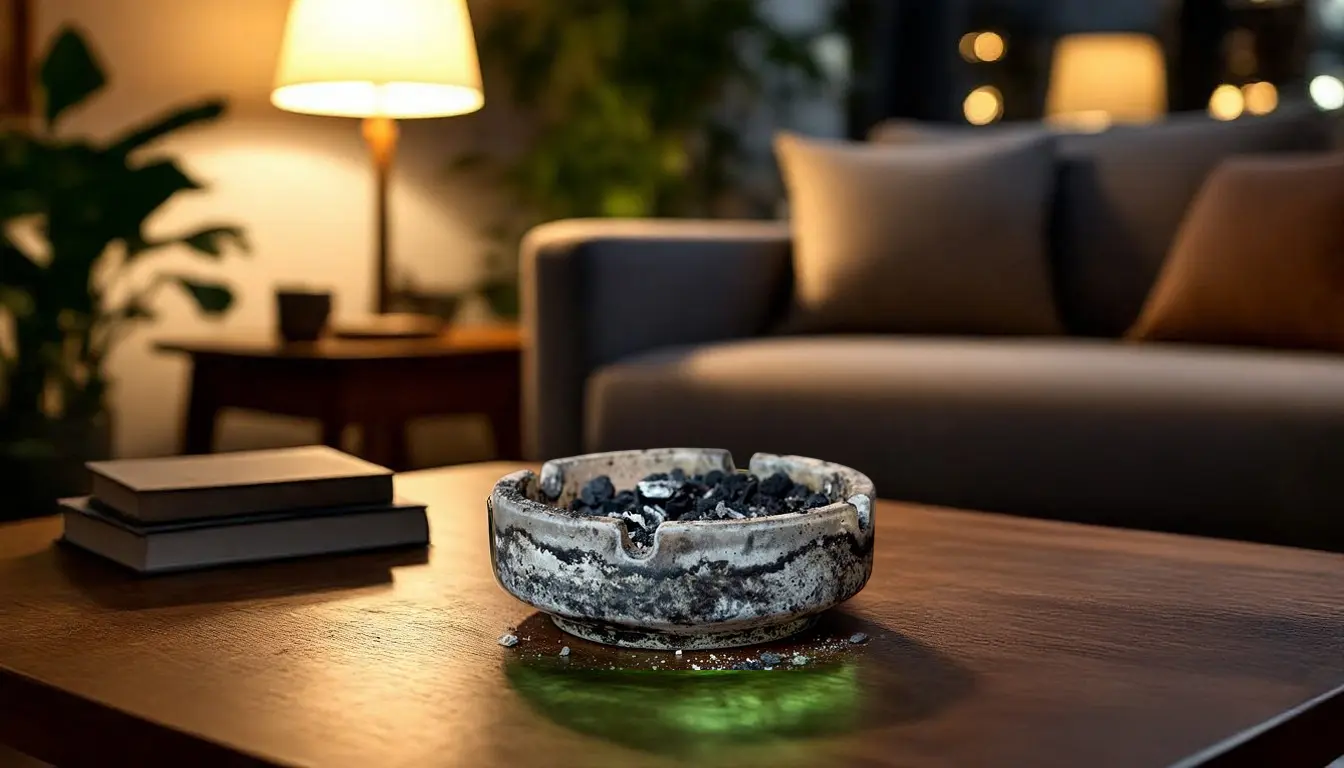
That is not because you are picky. It is because most ashtrays are designed as open trays, which lets odor escape into the room between uses.
The flaw is simple: open air exposure
An open ashtray is always “on.” Even when nothing is happening, the contents sit in open air and keep releasing odor. Over time, that stale note becomes part of the room.
So the ashtray stops being a tool and becomes a chore:
- empty it right away, or
- accept lingering smell
In a modern home, that tradeoff is unnecessary.
What people are actually searching for
When people search for a better ashtray, the language is consistent:
- designer ashtray
- modern ashtray
- sealed ashtray
- discreet ashtray
- no smell ashtrays
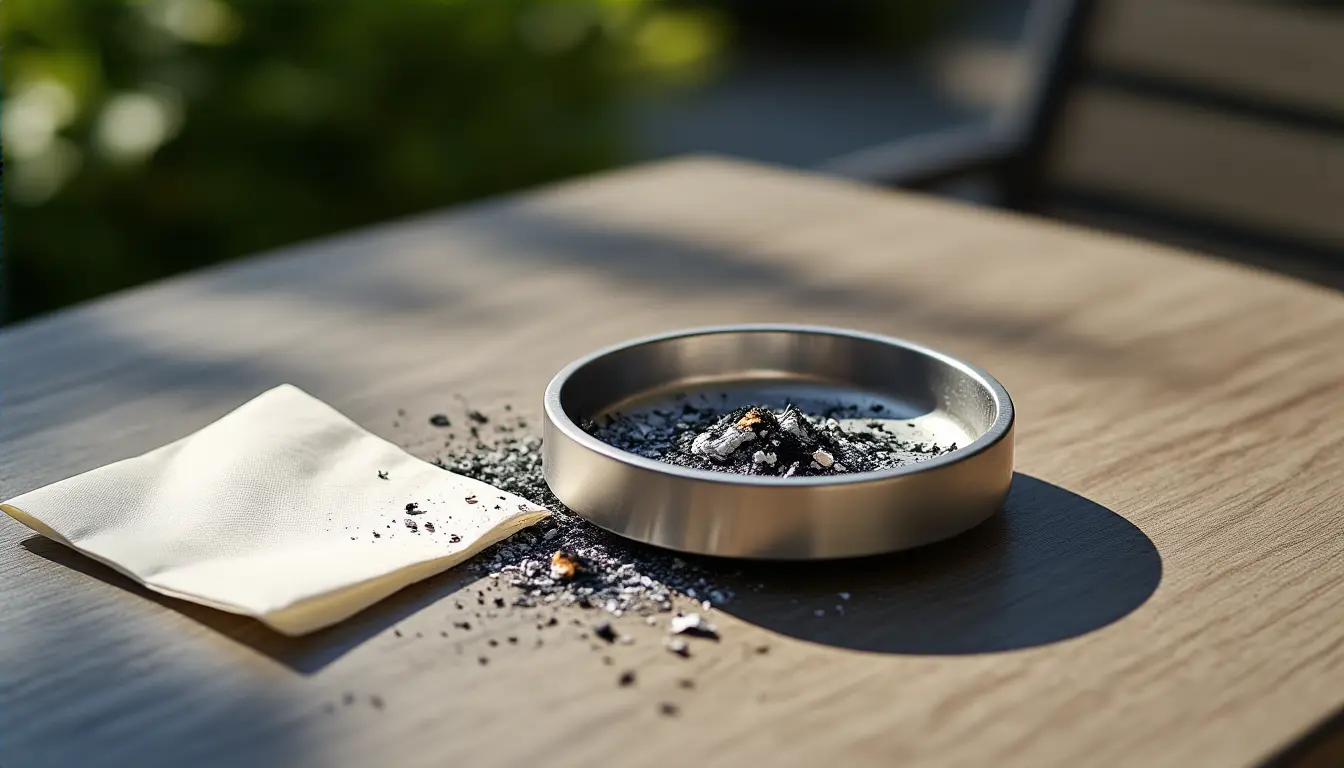
Different words, same goal: containment, not just a place to tap ash.
If you’re also trying to define what a designer ashtray actually is, this breakdown helps: What Is a Designer Ashtray?

What a modern ashtray needs to do
If you want an ashtray that works in a home, judge it by behavior.
Contain odor between uses
Look for a design that reduces exposure to open air. That usually means a lid that seats securely.
A truly sealed ashtray is not just “lidded.” It is built to keep contents contained when it is closed.
Look intentional on a surface
A designer ashtray should not dominate the room.
Look for:
- a clean silhouette
- minimal openings
- surfaces that do not visually collect grime
A discreet ashtray is one you can leave out without it announcing itself.
Stay stable and prevent spills
Ash is lightweight. A small bump can turn into a mess.
Look for:
- a stable base
- a low center of gravity
- a design that protects contents when moved
Clean without traps
Many ashtrays add grooves, textures, and tight corners that hold residue.
Look for:
- smooth interior surfaces
- accessible corners
- materials that do not hold odor easily
If it is annoying to clean, it will get avoided, and that is when smell becomes persistent.
Hold enough to be useful
Very small ashtrays fill fast and force frequent emptying.
A good modern ashtray gives you enough capacity to use it for a while, while still containing the contents.
“No smell ashtrays” and what that usually means
Nothing that holds ash is truly odorless forever. What people typically mean is:
- no lingering odor in the room between uses
- no stale smell building up over time
- no requirement to empty it immediately
You get closer to that experience by minimizing open air exposure. Containment is the upgrade.
The simplest upgrade: stop buying open trays
If you remember one thing, make it this:
Most ashtrays fail because they are open.
A modern ashtray that behaves like a sealed vessel solves the core problem first, and then design can do its job: fit the space.
One example of the sealed approach
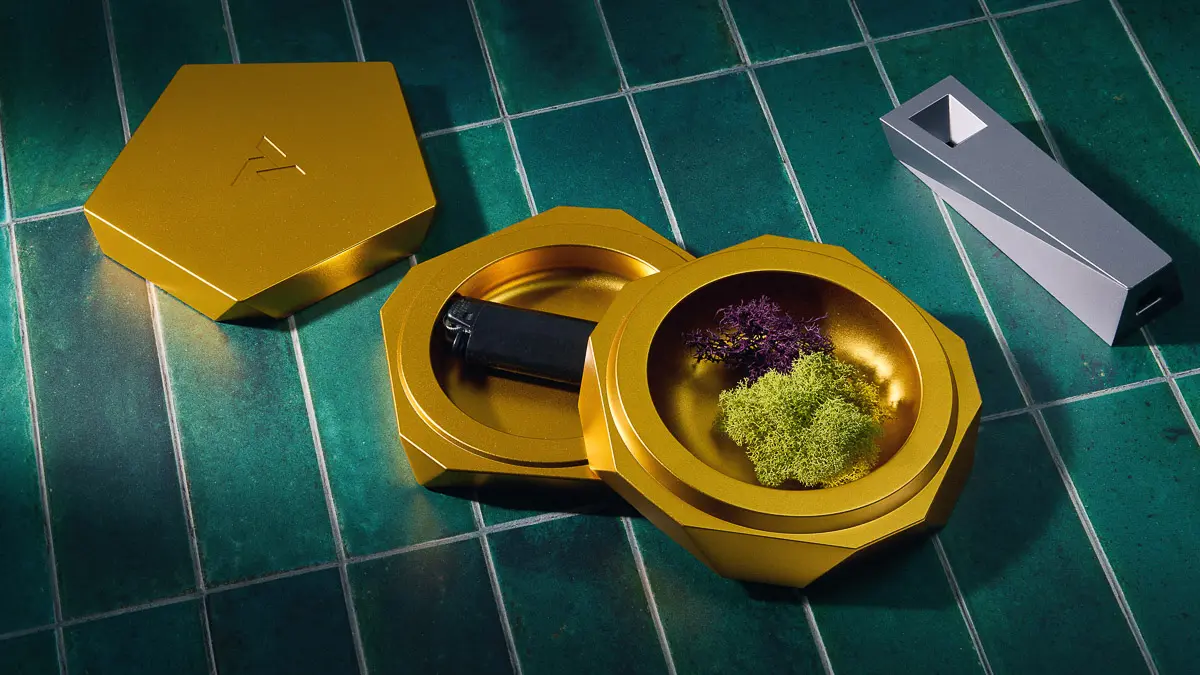
One modern approach is a multi-part vessel with a lid that closes the system so contents are not constantly exposed to the room.
Vesta is Artifact’s version of that idea: a sealed ashtray designed to be discreet on a surface and contain odor between uses.
If you are shopping, use the checklist above. The post should still make sense even if you never buy anything. The goal is to help you recognize what actually works.
Quick FAQ
What should I search for if I want the least smell?
Try: sealed ashtray, discrete ashtray, modern ashtray, no smell ashtrays.
Is any lidded ashtray “sealed”?
No. Many lids are decorative. A sealed ashtray meaningfully reduces open air exposure when closed.
What is the one flaw to avoid?
An open tray design.