You’ve probably touched anodized aluminum today. It’s the finish on many laptops, phones, flashlights, carabiners, and pans, and most people never learn what it is.
Anodized aluminum is aluminum whose surface has been converted, through an electrochemical process, into a hard, sealed layer of aluminum oxide. The layer is grown from the metal itself, so it isn’t a coating and it can’t peel. It can also hold color, which is how aluminum comes in black, gold, or pink without paint.
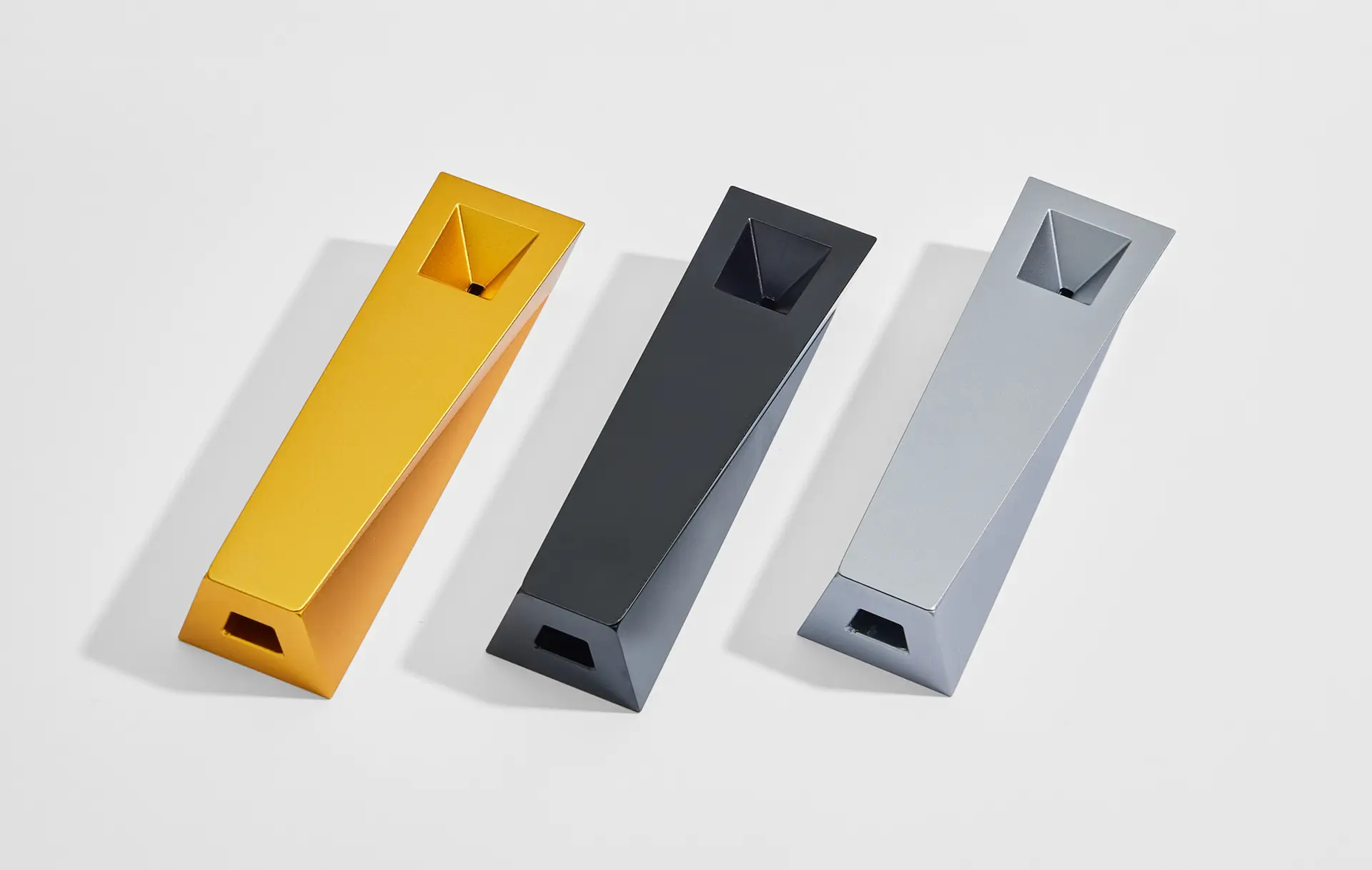
We use it on every Artifact Tempest pipe and every Vesta catchass. Here’s how anodizing works, how it gets its color, where its limits are, and what we’ve learned from putting it next to a flame every day.
How does anodizing work?
Anodizing runs an electrical current through aluminum in an acid bath, which converts the surface of the metal into aluminum oxide. Nothing is added on top.
Aluminum already forms a thin oxide skin the moment it meets air, only a few nanometers thick. Anodizing makes that layer far thicker on purpose. The part is wired as the anode, the positive side of the circuit, which is where the name comes from. The current drives oxygen into the surface, and the aluminum there becomes aluminum oxide. Part of the new layer grows down into the metal and part grows above the original surface.
For Type II anodizing, the kind used on Tempest, the finished layer is typically under a thousandth of an inch thick. That is thinner than a typical human hair, and it is the entire finish.
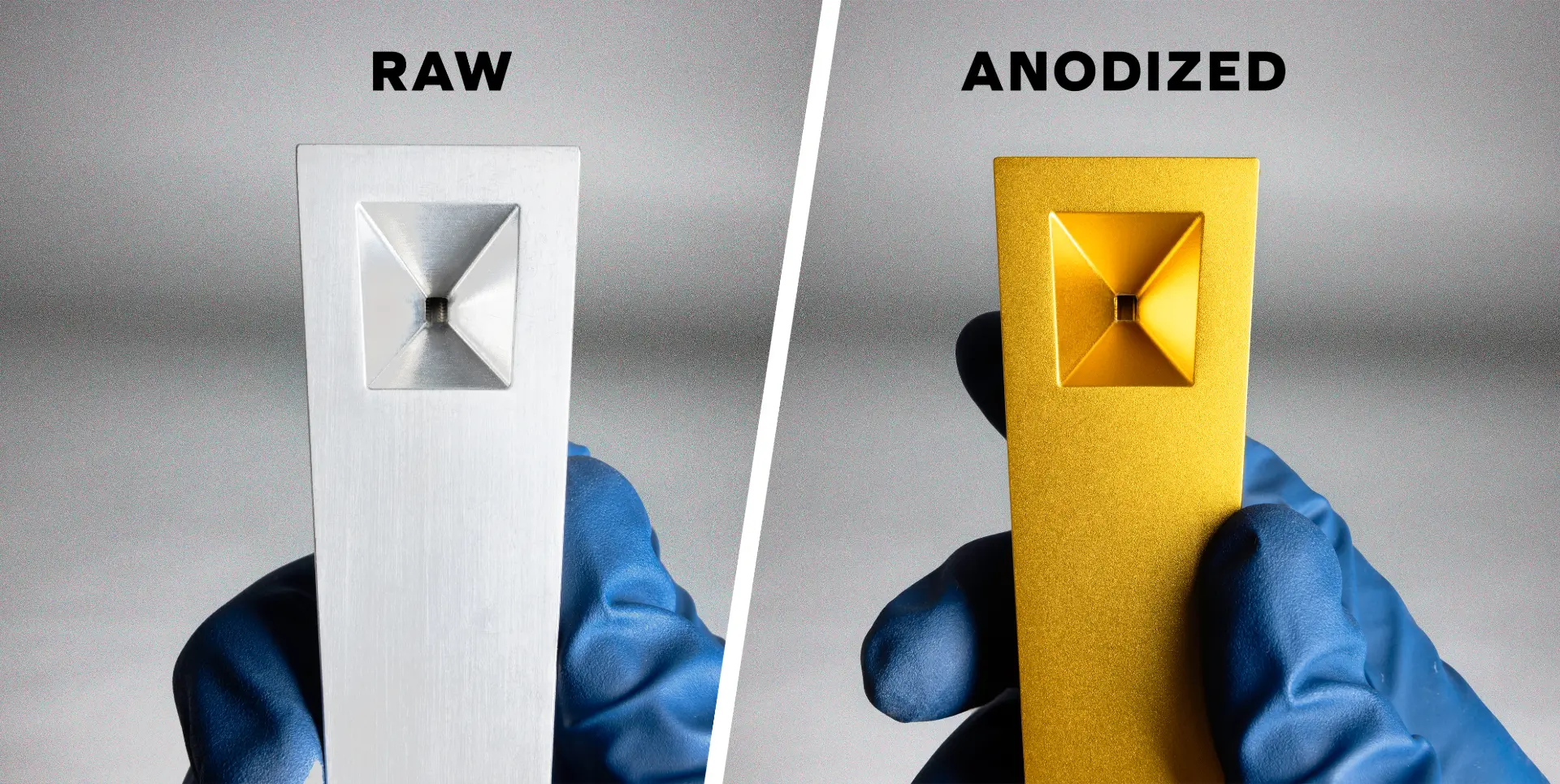
The photo at the top of this page shows a raw Tempest beside an anodized one. Both are the same metal. The anodized one has had its surface converted.
How does the color get inside the metal?
The color goes into microscopic pores in the oxide layer, and then the pores are sealed shut. Think of a tattoo rather than a sticker: the ink sits under the surface, not on it.
As the oxide grows, it forms a honeycomb of tiny hexagonal cells, each with a hollow pore at its center. The pores are tens of nanometers across, and there are billions of them in every square inch. Before sealing, the surface is absorbent, almost like a sponge.
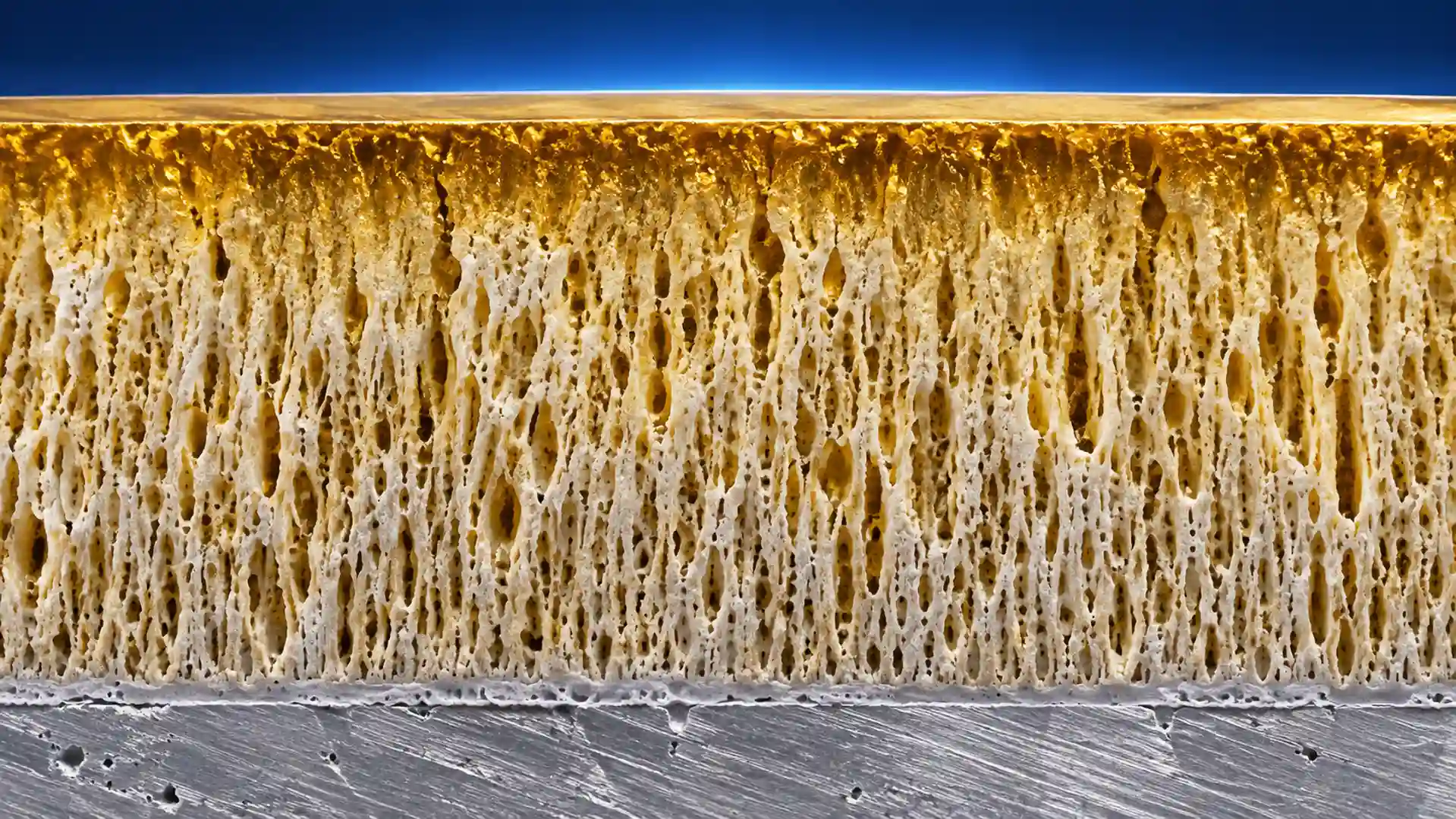
Color gets in one of two ways:
- Dip dyeing: the part soaks in a dye bath and the pores draw the dye in. This is how bright colors like gold and pink are made.
- Electrolytic coloring: a current deposits metal salts, such as tin or cobalt, at the bottom of the pores. This produces bronzes and blacks.
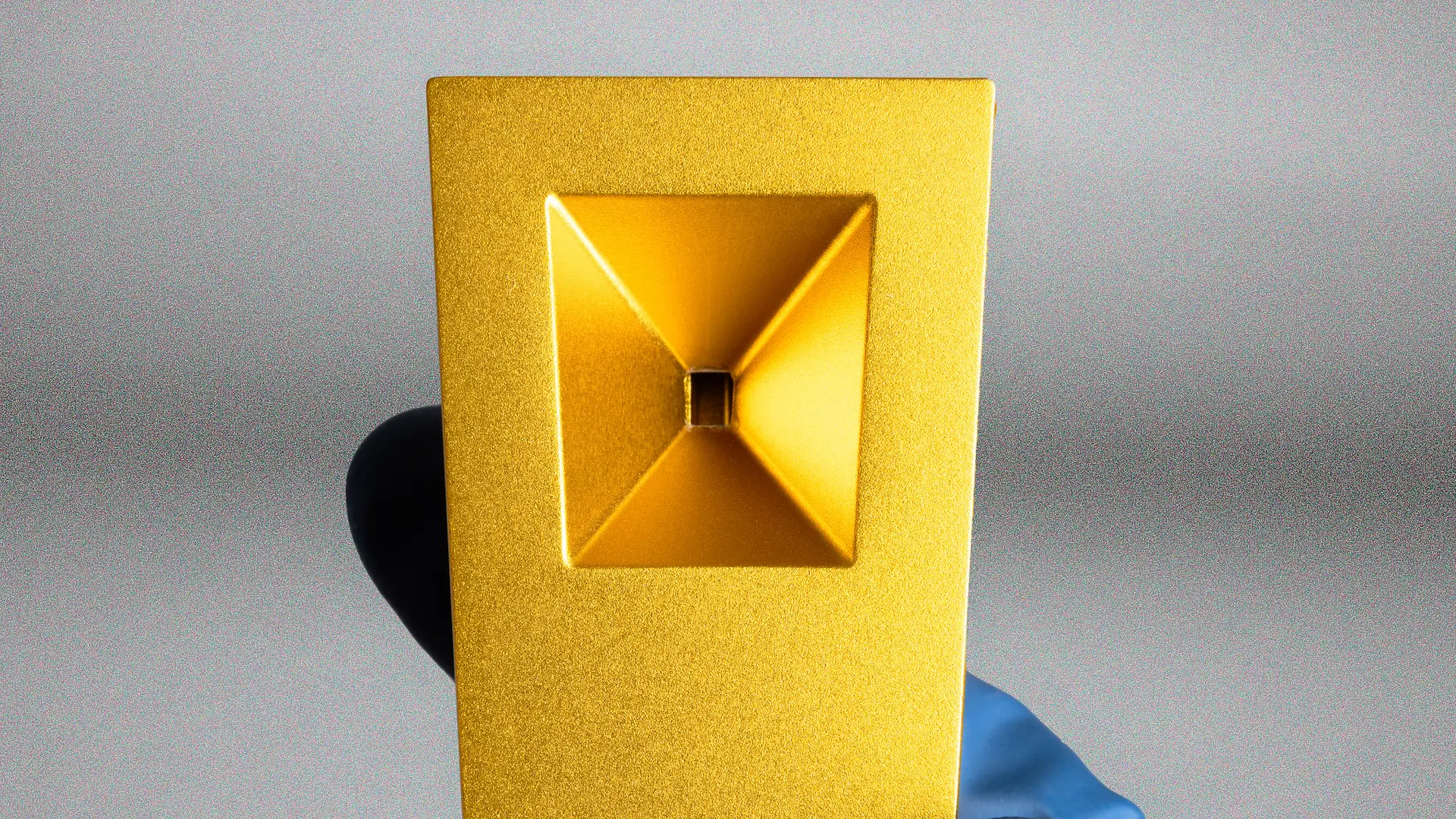
Either way, the color ends up inside the oxide, below the surface you touch. That is also why Radiance isn’t gold. It is gold-colored aluminum.
Is anodized aluminum painted?
No. Paint is a separate film resting on the surface. Anodized color sits inside the oxide layer, below the surface you touch, sealed in during the last step of the process. Every Tempest finish is dyed and sealed this way.
We hear this question from time to time, and it’s a fair one. Most colored things we own are painted, and most of them eventually show it: the chipped mug, the peeling phone case, the key scratch on a car door.
Why doesn’t anodized aluminum peel or chip?
Anodizing can’t peel because there is no boundary between the finish and the metal for anything to separate along. Paint and powder coat are separate layers held on by adhesion. When that adhesion fails, from an impact, heat, or age, the layer lifts. Anodized oxide was never a separate layer. It was the metal.
The last step, sealing, is what makes the color permanent. The part goes into near-boiling water or a chemical sealing solution. The oxide reacts with the water, swells, and pinches the top of every pore closed. The color is now trapped inside a layer that is harder than the aluminum underneath it.
An unsealed part would still be anodized, but its color could bleed out and its open pores would hold grime. Sealing turns an absorbent surface into a closed, smooth one. That closed surface is also why resin has nothing to soak into on an anodized pipe.
Is the silver Tempest just bare aluminum?
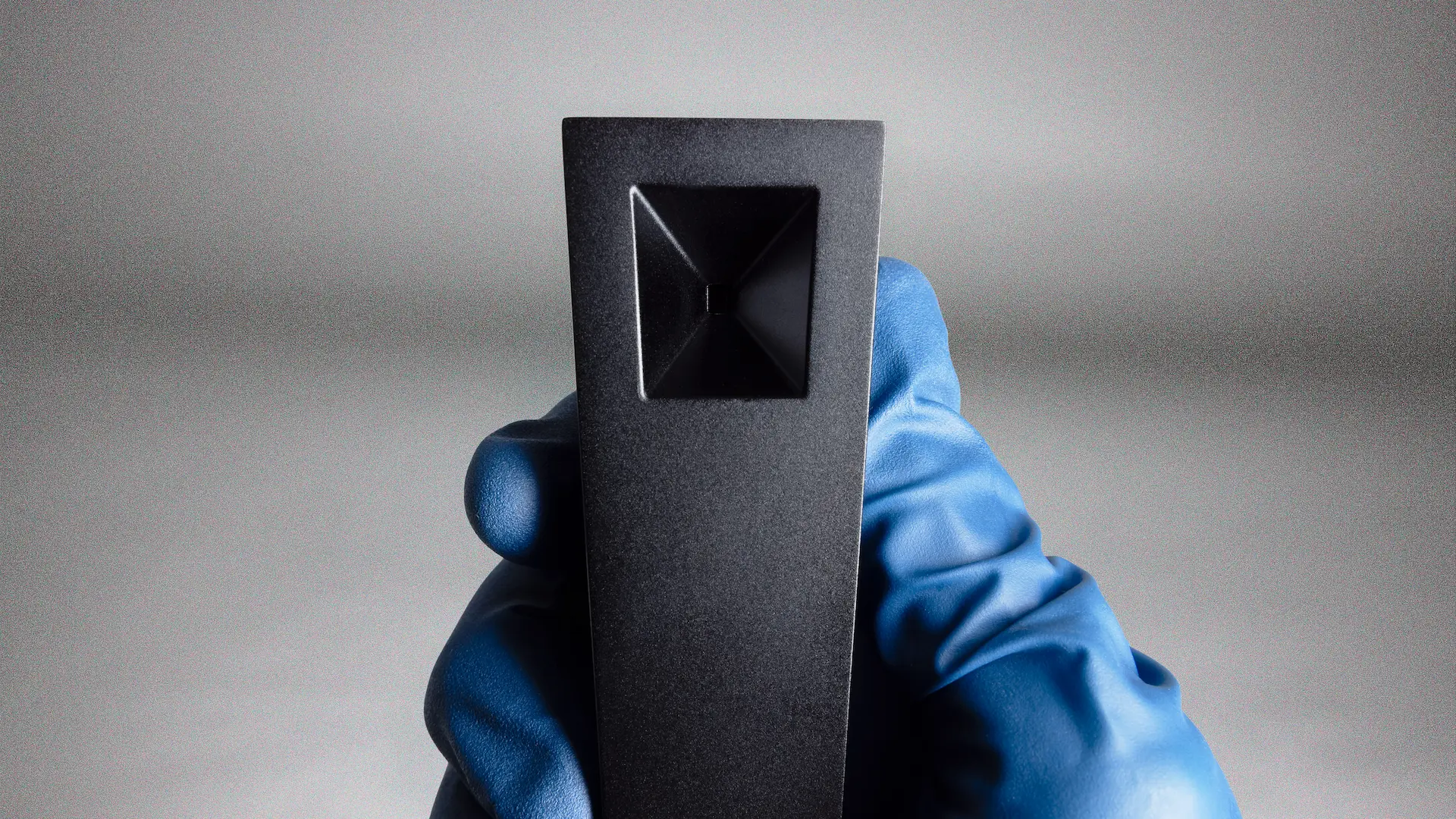
No. Mercury is dyed like every other Tempest finish. Its silver is a chosen color, sealed inside the oxide in the same way as the black, gold, and pink. It is not raw metal showing through.
Under all four finishes is the same unfinished aluminum, shown beside an anodized Tempest in the photo at the top of this page. You would only see that raw metal if something wore through the oxide.
What’s the difference between Type II and Type III anodizing?
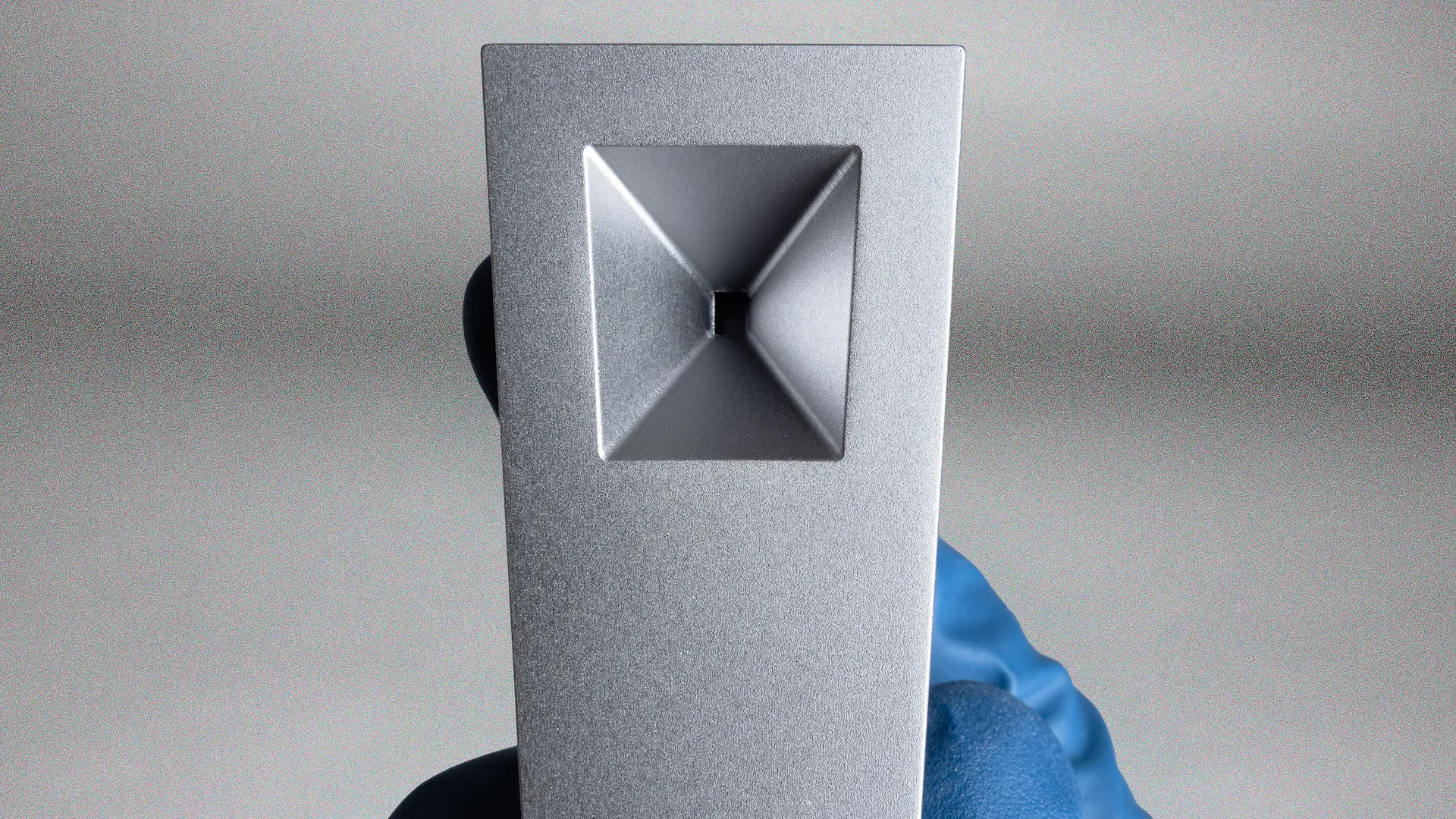
Type II is the anodizing used for finishes people look at. Type III, often called hard anodizing, is built for industrial parts that grind against each other under load. For an object you hold in your hand, Type II does nearly everything Type III does, and it looks far better.
Both are sealed. Both resist corrosion. Both are much harder than raw aluminum. Type III is grown thicker and denser, which gives it an edge in abrasion resistance. That matters for pistons, gears, and sliding mechanisms.
The tradeoff is appearance. Hard anodizing comes out naturally dark, in grays and bronzes, and takes dye poorly, so bright, even colors are difficult. Type II takes dye cleanly, which is how a finish like Glimmer pink exists at all.
A pipe is not a piston. Type II gives it the protection it needs and a color worth looking at.
Can anodized aluminum scratch or wear?
Yes. Anodized aluminum resists scratches far better than raw aluminum, but it is not scratchproof. A deep enough scratch, or enough friction in one spot, will wear through the oxide and show the bare metal underneath.
On Tempest, the only wear we have seen in our own testing is fine scratching where the two halves meet and rub together. That is the part that moves the most.
Two things are worth knowing. First, exposed aluminum immediately forms its own thin oxide, so a scratch is cosmetic, not a weak point. Second, anodizing can’t be touched up like paint. No pen blends in. It’s better to see it the way you see a worn leather wallet or the brass on an old door handle: the marks show where your hands have been.
Does a lighter damage an anodized finish?
Not in our experience. Across all of our testing, we have not seen a lighter discolor a Tempest finish, including around the bowl, where the flame gets closest.
Aluminum oxide is a ceramic. It stays chemically stable at temperatures far beyond anything the body of a pipe reaches in use. In theory, heat can affect the finish in two ways. Some dyes fade under sustained high heat. Anodized layers can also develop fine surface cracks, called crazing, if they are repeatedly heated well beyond normal use, because the oxide and the metal expand at different rates. Both effects are cosmetic, and neither changes what the surface is made of.
Normal lighter use means a brief flame aimed at the material in the bowl, not at the metal. That is well within what the finish handles. For how the pipe manages the heat of the smoke itself, see The Fluid Dynamics of Smoke Cooling.
How do you clean anodized aluminum without damaging it?
Clean it with isopropyl alcohol, warm water, and mild soap. Avoid strong alkaline or acidic cleaners, which dissolve the oxide layer and strip the color.
The oxide stands up to most things, but it is vulnerable to high pH. Oven cleaner, drain cleaner, and bleach can all etch it. Dishwasher detergent is alkaline too, which is why anodized cookware is hand-wash only. Steel wool and other harsh abrasives will scratch through the layer.
A routine that works:
- Separate the halves.
- Wipe or soak with isopropyl alcohol to loosen resin.
- Scrub the pathway with a soft brush.
- Rinse with warm water and dry.
The brush included with Tempest is sized for the pathway. A bowl pick clears a spent bowl without scraping metal on metal, which protects the finish where it gets the most contact.
How does anodizing compare to paint, powder coat, and Cerakote?
Every metal finish has jobs it does well. The main difference is where the color lives: inside the metal, or on top of it.
Powder coat and Cerakote are excellent finishes, and both show up on objects we admire. For a surface that sits beside a flame and gets cleaned often, we wanted the color inside the metal rather than on it.
Is anodized aluminum safe to smoke from?
Yes. Sealed anodized aluminum is chemically stable, and there is no paint or coating on it to burn. The concerns people associate with smoking from aluminum come from foil and painted cans, which are thin, coated, and never meant for flame. We cover the health questions, including the Alzheimer’s myth, in Is It Safe to Smoke Out of Aluminum Pipes?
What “is it painted?” is really asking
“Is it painted?” is rarely about paint. It’s about whether something is what it looks like, and whether it will still look that way years from now. Most of us have learned to be suspicious of color, for good reason.
Anodized color doesn’t call for that suspicion. It isn’t a layer resting on the surface. It is part of the object. The only thing that changes it is use, and use leaves the kind of marks worth keeping.
If you’re comparing pipes beyond finish, the modern smoking pipe guide covers cooling and cleaning. All four finishes are on the Tempest page.