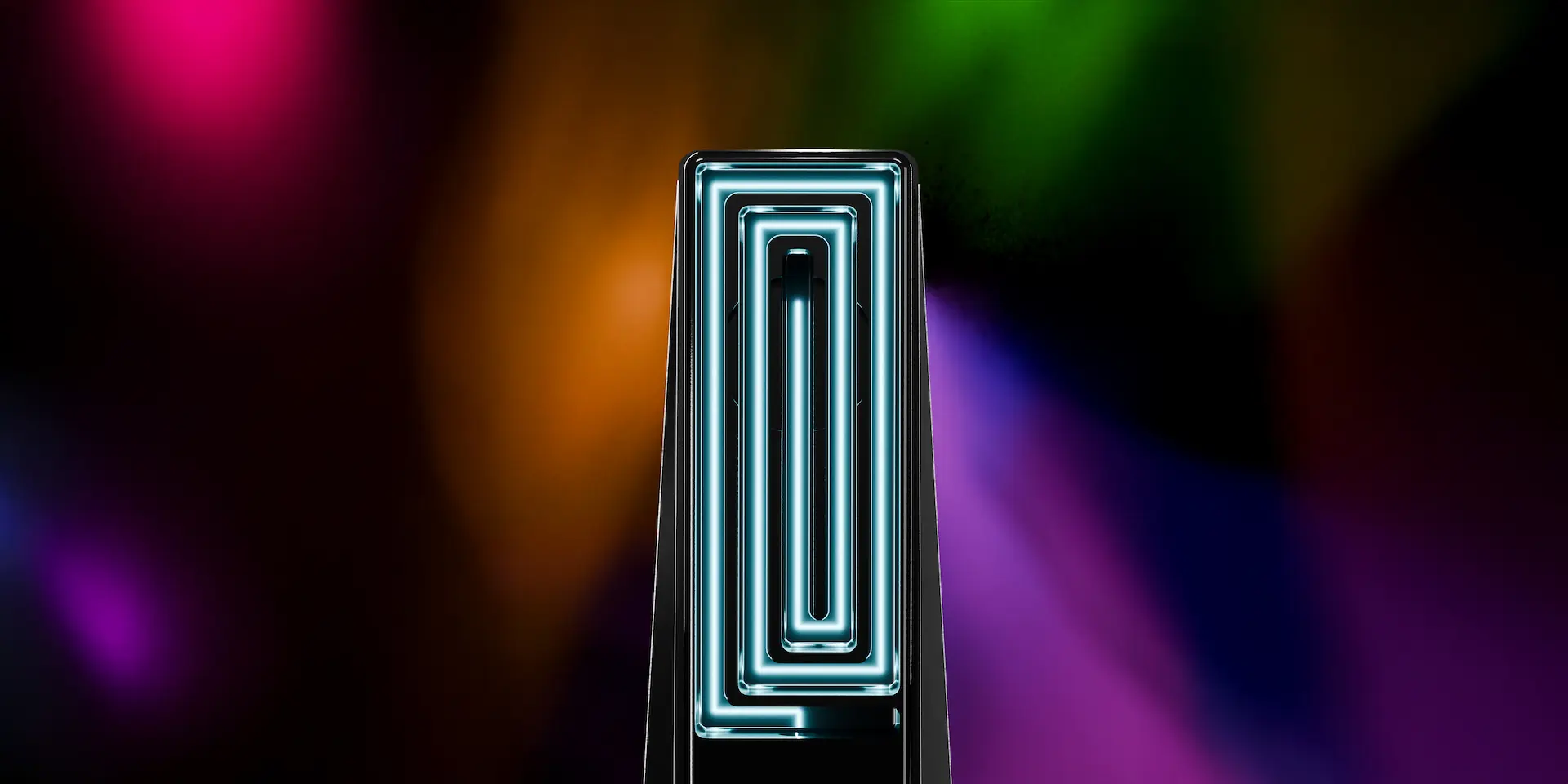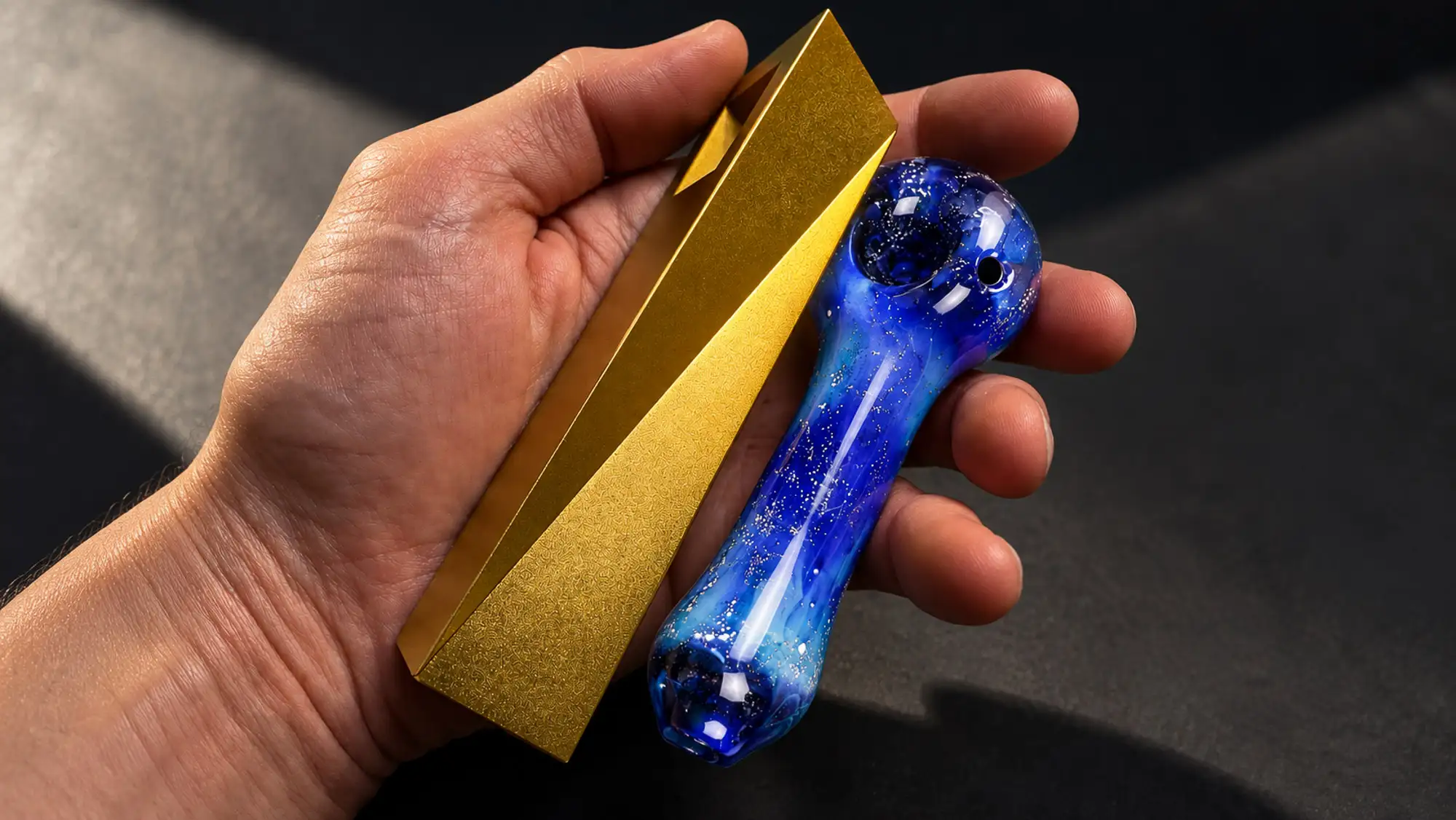
One of my favorite things to do is hand someone the Tempest for the first time.
It goes the same way almost every time. They take the pipe with a dose of skepticism, turn it over once, and stop talking. Then they discover that if they give it a light tug the two halves come apart in their hands. From that point I usually have to ask for it back because it becomes a fidget toy, something that can't be put down.
That's the part I simply can't put on a website. What I can do is answer the questions people ask:
All of these questions have been addressed on this site in one form or another. But a recent four star review reminded me that there is one question I haven't yet addressed.
"So I use this pipe exclusively. There is one thing missing from the Artifact and that is a carb. A carb should be integrated… The Artifact is perfect for me minus no carb and even then it's a solid addition." - Four star review by Anonymous, Tempest (Abyss)
The carb was never missing. It was never invited.
So why didn't I include a carb when I designed the Tempest? The answer is simple: it doesn't need one. And adding one would break the design.
I will get into the details below, but the short version is this. A carb is a legacy concept designed to manage the airflow on a pipe that has no internal airflow system. The Tempest has engineered airflow. The Labyrinth is built for measured, intentional smoking. The missing carb is not a failure, it's a feature. It is a consequence of the thing that makes the pipe work so well.
The bottom line is simpler than the engineering that goes into it: the trace amount of smoke left in the pathway between hits is negligible, and it's not going anywhere. It waits patiently for you between hits. Smoke a bowl with intention and there is nothing to rescue anyway.
The rest is the long version, with more detail to explain the dynamics and physics involved. If that's your thing, read on.
1. What is a carb on a pipe?
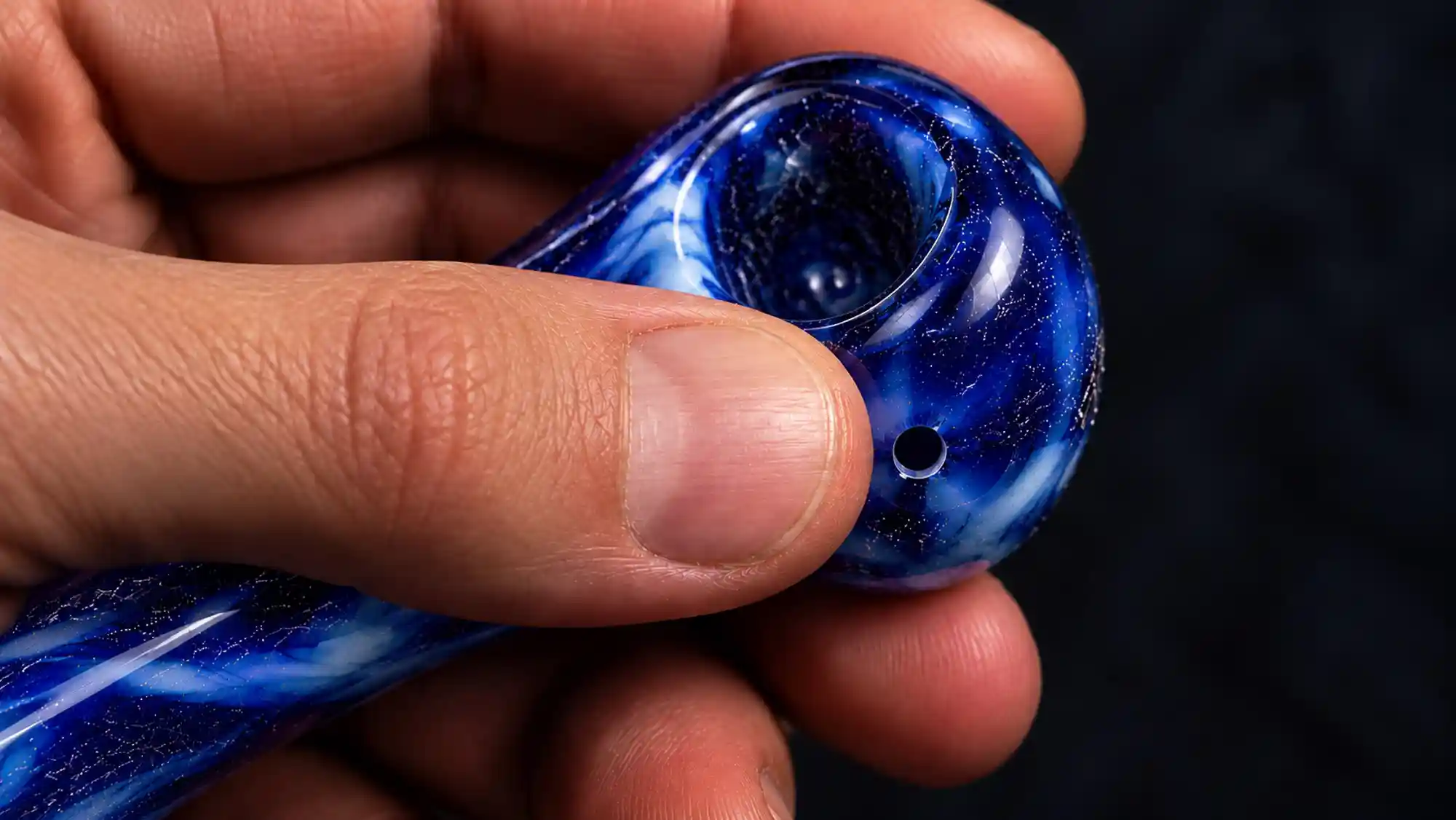
A carb is a small hole in the side of a pipe, usually near the bowl. You cover it with a finger while you draw, then lift your finger to open it.
The name is short for carburetor, borrowed from engines, where a carburetor mixes fuel with air. The pipe version does something simpler. Covering the hole forces all incoming air through the bowl. Uncovering it opens a second inlet, and the rush of fresh air pushes whatever smoke is sitting inside the pipe out through the mouthpiece in one fast pull.
That last motion has a name in practice: clearing the pipe. It is the main reason the hole exists. A covered carb also helps you corner a fresh bowl and keep a cherry going, which are real techniques worth knowing, but clearing is the job the hole was cut for.
2. Why do most hand pipes have one?
Most pipes have a carb because their internal shape traps smoke where you cannot easily retrieve it. Smoke leaves the bowl, fills a chamber, and some of it hangs around instead of reaching your mouth. The carb adds another door. Open it mid-draw and fresh air floods the chamber, sweeping the held smoke forward.
That is good engineering, and it scales with volume. A water pipe is the clearest case. The chamber is tall, it holds a lot, and leaving that much smoke behind is a real loss, which is why every water pipe has some way to flush it, whether that is a carb hole or a bowl you pull out. The bigger the chamber, the more necessary the mechanism.
I have real respect for the glass spoon pipe. The design has lasted for decades because it works, it is beautiful in the right hands, and it solved its own problems honestly. The carb is one of those solutions. But on a small hand pipe the case for it gets thin, and most hand pipes carry a carb because the spoon pipe made it standard, not because the geometry demands it. Smoke a small bowl deliberately, or pass it around a circle where it never rests, and the hole is doing very little work.
3. Do you lose smoke without a carb?
Barely, and not for the reason people assume.
Smoke sitting inside a pipe between pulls has not been lost. It is queued. It is still there on your next draw, so a carb does not save smoke, it changes the timing. It hands you smoke now that you would have received in thirty seconds.
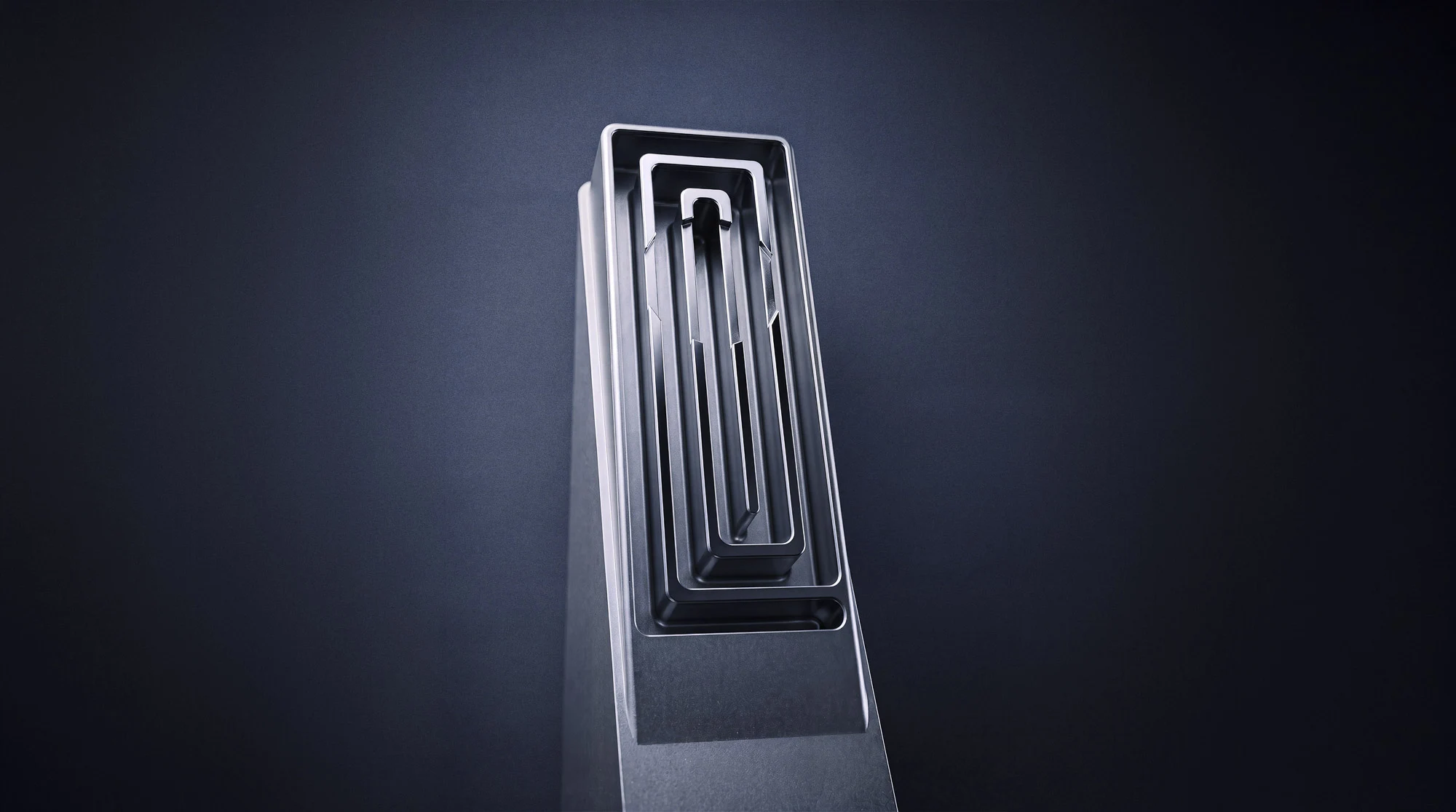
What it can rescue is the smoke that escapes while a pipe sits idle, and escape depends on exits. A carbed pipe has three: the bowl, the mouthpiece, and the carb. Smoke diffuses quietly out of that third hole the whole time the pipe rests on the table. The Tempest has two, and with product still in the bowl that path is obstructed, leaving the mouthpiece at the far end of the Labyrinth. The Labyrinth is a narrow channel, not an open room. Smoke inside it has nowhere convenient to go, so it stays put and waits.
Cutting a carb into that channel would open a shortcut out of the one place the pipe is built to hold smoke. That is a weakness, not a strength.
4. Load the bowl like you pour a glass of wine
The real answer to conserving product is technique, not hardware.
If you are worried about smoke sitting in a pipe you walked away from, the pipe is not the variable. The bowl is. A bowl packed larger than the session it belongs to will always leave something behind, on any pipe, carb or no carb. And while you deliberate, that bowl is smoldering away more than any carb could ever recover.
You would not fill a wine glass to the brim and then leave half of it sitting out all night. You pour what the moment calls for. Load a bowl the same way and honor what you are smoking. Smaller bowls, finished deliberately, taste better and waste less.
That idea deserves a post of its own and it will get one. For now the point stands: measured hits solve a problem that a carb only mitigates.
5. Why the Tempest doesn't have one
Because it has engineered airflow instead, and you cannot have both.
The Labyrinth is a long sculpted channel that spins and cools the smoke on its way to the mouthpiece. The full mechanism has its own post. What matters here is where the smoke ends up, which is concentrated inside that pathway. A carb port would be a vent cut into the wall of the exact section where the good stuff collects, and opening it would dump the densest part of the draw.
I have written before that every object should justify its existence. The same test applies one level down, to every feature on every object. A carb on the Tempest would be a hole that exists because people expect holes, doing a job the pathway already does, at the cost of the thing the pipe was built for. It did not earn its place, so it isn't there.
If conserving product is what you actually care about, and that is the real motive behind wanting a carb, there is a better answer than a hole. The Tempest Shield is a magnetic cover that slides over the bowl and snuffs it. Closing the bowl stops the burn, which is where the waste actually happens. The Shield is sold separately and the Tempest works fully without it.
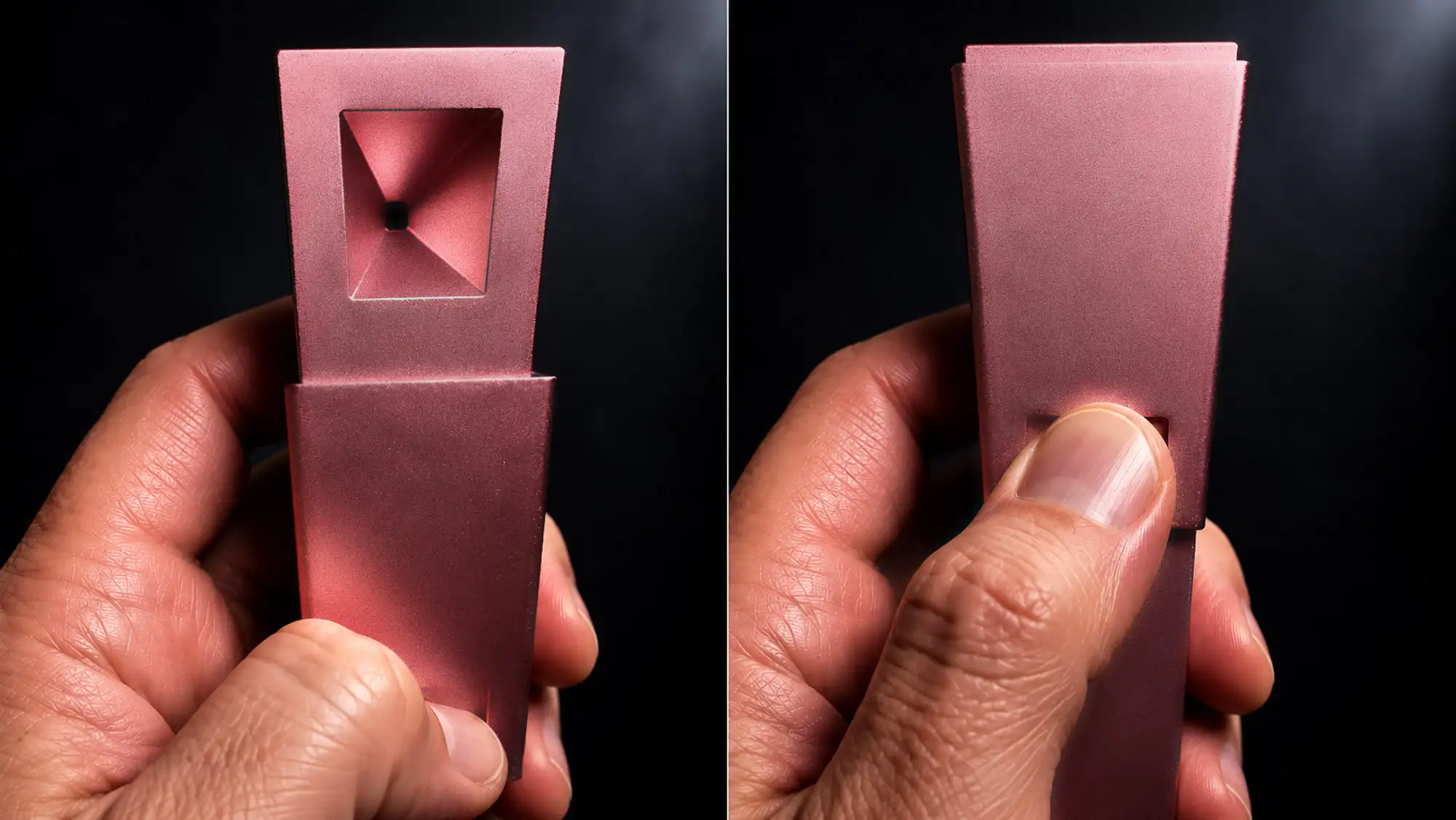
6. It is a different way to smoke
The trade is a small one. You give up the reflex of clearing between hits, and the pipe handles airflow internally instead. On the final pull, with the bowl cached, the air you draw through the Labyrinth clears the pipe on its own.
That is not a workaround. It is the design. The smoke waits in the Labyrinth for as long as the session lasts, and the last pull takes what is left. Nothing is stranded and nothing needs flushing. If you learned on a spoon pipe, the instinct to reach for a carb is real, and it fades in about two bowls.
Thanks for reading this far. If you care how the inside of a pipe works, you are exactly who we build these for.